
What to Check Before Your First Visit
A first visit becomes easier when you remove the guesswork before you enter. Check opening rhythm, choose the entrance neighbors use, and pack so you can move with your hands free.

A checklist that matches the real hall
The problem with most travel planning is that it focuses on the building, not the movement inside. Before your first visit, spend a little time verifying four points that change how queues form.
If you arrive already knowing where you should stand next, you learn the stall instead of negotiating your position.
Check the entrances and the first queue
Markets often “own” one entrance for regular neighbors, while visitors naturally drift to the most visible doors. That difference can decide how crowded your first corridor will be.
- Find the entrance neighbors use when they have short shopping loops.
- Watch whether the canteen shares a queue with grocery stalls.
- Notice if a small detour avoids the widest bottleneck near the first counters.
Plan your timing by the stall’s turnover
“Open at” is not enough for a first visit. What matters is when the stall actually starts moving in repeat cycles. A hall may be open, but the first active turnover can happen later.
When you arrive, you should be able to see a reset after each customer. If you only see long pauses, expect delays in your own order.
Pack to avoid hand clutter at the counter
Bag decisions are queue decisions. During a busy moment, every extra item in your hands adds hesitation and bumps.
- Keep your payment and small essentials easily reachable.
- Move bulky items out of the route where you will stand and point.
- Use a simple plan for where your bag goes while you order.
- Prepare to step aside without adjusting straps mid-order.
- Remember: the counter needs a clear space for reset and weighing.
A fast pre-walk summary
- Opening rhythm verified enough for the stall’s first reset.
- Entrance chosen to avoid the first crowded corridor.
- Shared queue awareness so you do not pick the wrong lane.
- Packed to keep your hands free for one clean pointing-and-ordering cycle.
With these checks, your first visit stops feeling like guessing. You will still adapt on the day, but your body will already know what to do next.
Related Articles

Choosing the Right Market for a First Visit
Not every hall suits a first attempt. This article compares noise, queue shape, and how forgiving a room is when you pause at the scale, so you can pick a gentler starting point.
Read Article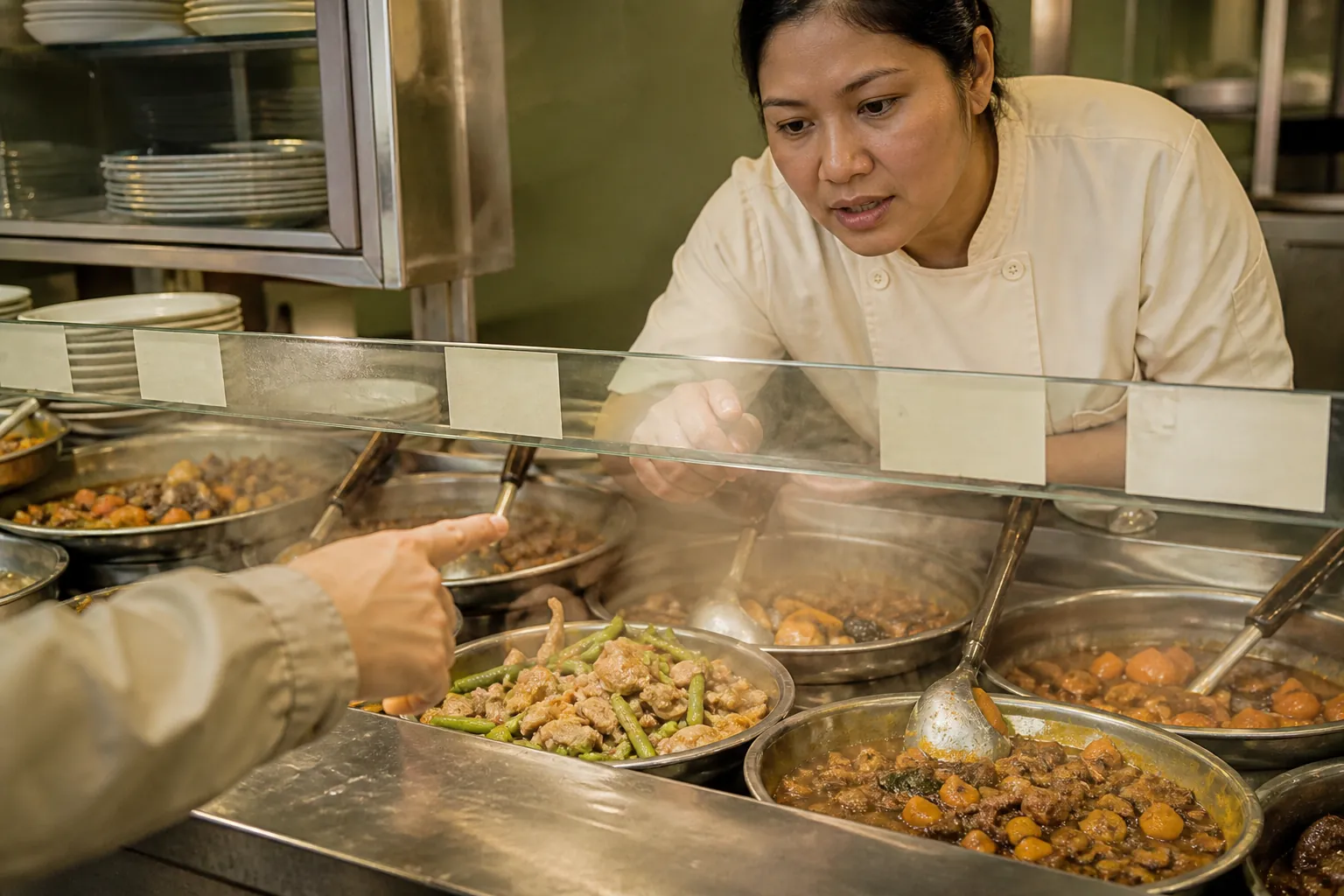
How to Point and Order Without a Shared Language
Pointing is normal in many halls, but timing matters. Learn when to gesture, when to hold up a number, and how to step aside without restarting the line behind you.
Read Article
Reading a Busy Stall from the Queue
When labels mean nothing to you, locals read turnover instead. This note explains what to watch while you wait: steam, refill speed, and who the seller actually serves.
Read ArticlePlease read before you travel
filibranch provides knowledge about visiting working markets and everyday eateries, and offers consultations on this part of a trip. The materials on this site are meant to help you understand how these places operate and how visitors can move through them with care.
We do not give advice on diet, allergies, or health. If you have questions about what you can eat, speak with a qualified professional. Conditions on the ground change between trips: opening hours, which rows are trading, and local requirements should be checked again directly before you go.
You decide how to travel. filibranch is not responsible for choices you make after reading these pages or after a consultation. Use the guides as preparation, then confirm details with people on site.