
Choosing the Right Market for a First Visit
A first visit works best when you pick a hall whose rhythm matches your comfort. Watch the queue shape, listen to the noise level, and choose a place where you can pause briefly without blocking the scale line behind you.

Pick a hall you can move through
Every market has a “walking logic”: where people enter, where they slow down, and where they step aside to make space for the seller. If you choose a hall with a tight corridor and a heavy rush, you will spend your first minutes apologizing with your body instead of learning with your eyes.
Before you commit to one direction, decide what you can actually handle. Some visitors do fine with noise and quick movement, but need extra room to stop. Others are comfortable standing longer, yet get overwhelmed when multiple sellers call at once. Choose a hall that supports your needs.
Read the queue rhythm in under a minute
The easiest way to predict how your first order will feel is to watch the line behave around the scale. You do not need to understand every word; you only need to see what happens after the seller asks a question.
- Stand where you can see the people closest to the counter, not just the far entrance of the hall.
- Notice whether customers approach in a single stream or in bursts when one tray finishes.
- Look for space to step aside after you point your choice. If the corridor narrows at that moment, the hall may be too demanding for a first attempt.
- Watch how the seller resets the counter. Quick resets usually mean the room can absorb small pauses without losing rhythm.
- Decide whether your hands will be steady when you hold up a number, or whether you need a calmer moment to breathe first.
A gentle first market is the one where you can pause for a breath, then move on, without forcing the line behind you to wait longer.
Compare three signals of “forgiving” stalls
When you are new, the most stressful part is not choosing what to buy. It is choosing when to stop. The following signals help you estimate how much grace the stall gives during small mistakes.
- The queue has clear edges. People can step aside, so you can wait for the seller’s next cue.
- The stall does not rely on complex labels. If the seller can show the item directly, your first attempt becomes easier.
- Restocking is visible. When trays and weights reset quickly, you spend less time hovering in uncertainty.
Your practical checklist for the first walk-in
After you observe the rhythm, use a short checklist that matches real movement. This is how you pick a hall that supports your learning without turning your visit into a performance.
- Choose a hall where you can approach the counter without squeezing through bodies.
- Confirm that you can step aside after pointing, rather than staying in the same spot.
- Pick a time when you will not be the only new person in the room.
- Plan to exit the way you entered, with the tray route already in mind.
If you are unsure, start with the stall that looks easiest to “finish.” A first visit is not about buying everything; it is about completing one simple cycle: approach, point, pay, and leave.
Related Articles
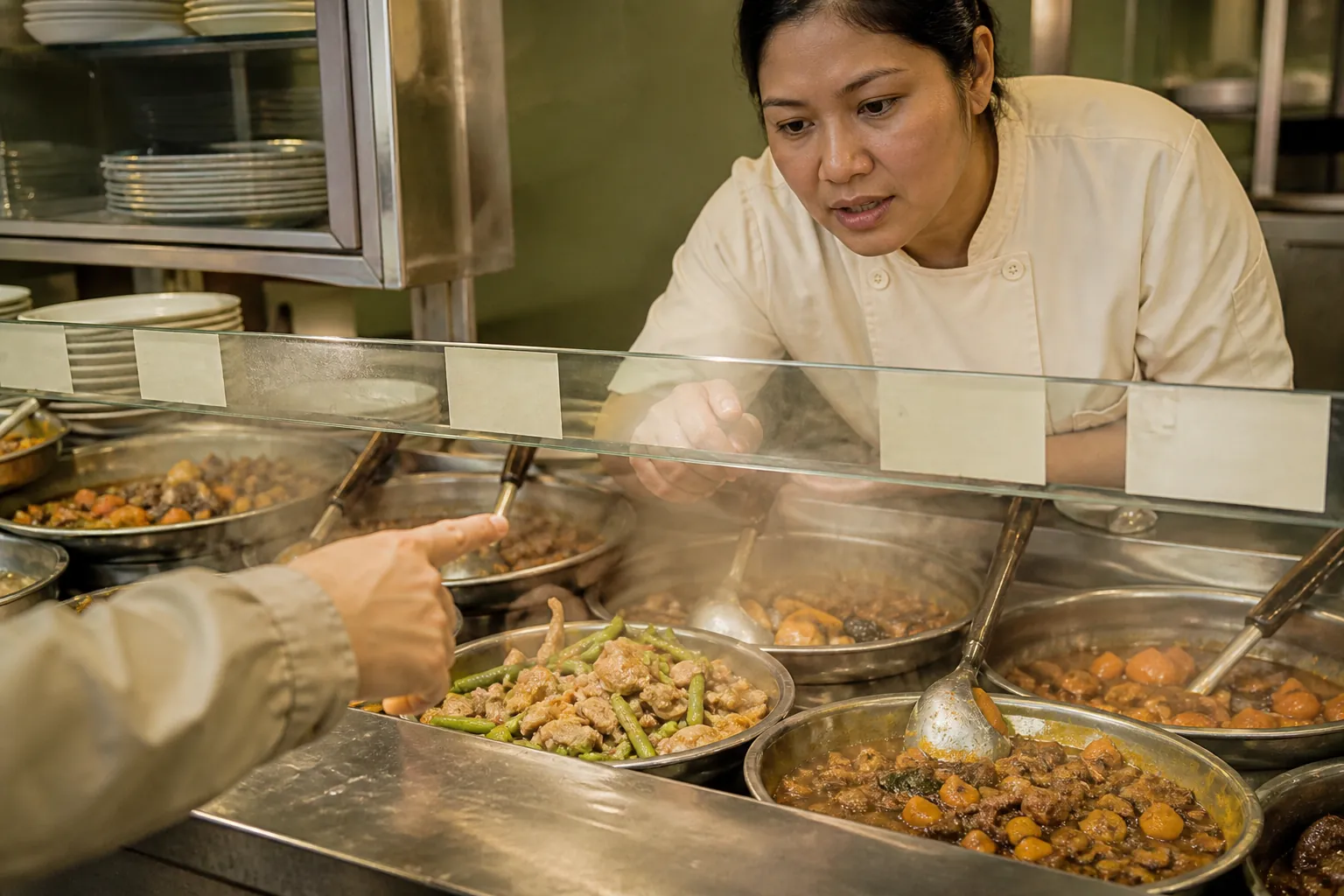
How to Point and Order Without a Shared Language
Pointing is normal in many halls, but timing matters. Learn when to gesture, when to hold up a number, and how to step aside without restarting the line behind you.
Read Article
Reading a Busy Stall from the Queue
When labels mean nothing to you, locals read turnover instead. This note explains what to watch while you wait: steam, refill speed, and who the seller actually serves.
Read Article
What to Check Before Your First Visit
A short checklist for the night before: opening hour, which entrance neighbors use, whether the canteen shares a queue with grocery stalls, and what to leave in your bag.
Read ArticlePlease read before you travel
filibranch provides knowledge about visiting working markets and everyday eateries, and offers consultations on this part of a trip. The materials on this site are meant to help you understand how these places operate and how visitors can move through them with care.
We do not give advice on diet, allergies, or health. If you have questions about what you can eat, speak with a qualified professional. Conditions on the ground change between trips: opening hours, which rows are trading, and local requirements should be checked again directly before you go.
You decide how to travel. filibranch is not responsible for choices you make after reading these pages or after a consultation. Use the guides as preparation, then confirm details with people on site.