
How to Point and Order Without a Shared Language
Pointing is normal in many halls, but timing matters. Learn when to gesture, when to hold up a number, and how to step aside so the line behind you never has to start over.
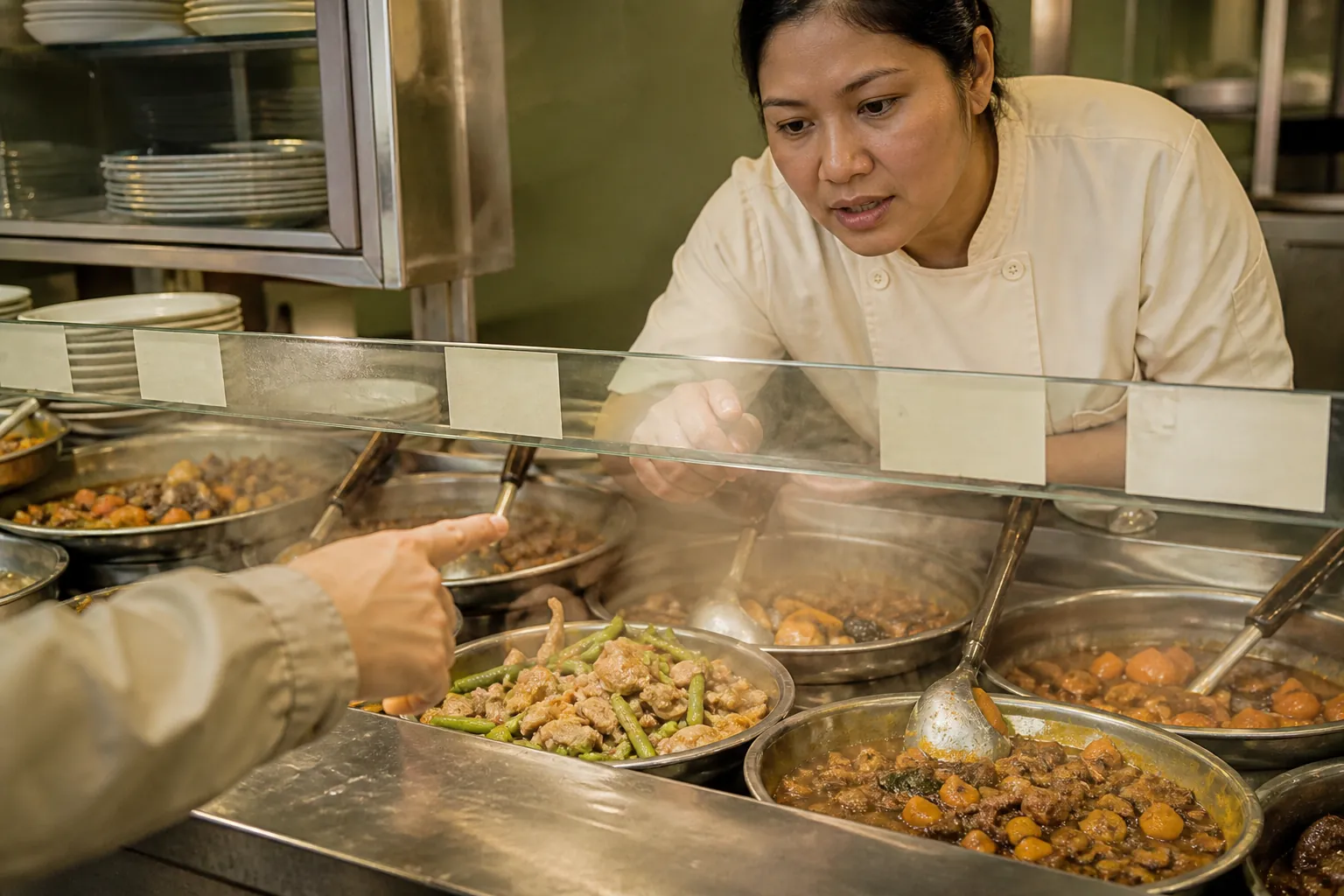
Let the counter lead the conversation
When you do not share a language, your body becomes the message. The goal is not to “win” the interaction with loud gestures. The goal is to match the stall’s tempo: show your choice at the right moment, then clear the space for the next person.
Most sellers expect variety. They have handled visitors who point quickly, visitors who pause, and visitors who need to restart their hands. What they do not tolerate well is a customer who blocks the counter while searching for the next word.
A gesture sequence that keeps the line moving
Use this sequence as a rehearsal. You can apply it to prepared foods, deli counters, and any stall where you can see the item in front of you.
- Approach with your shoulders aligned. Stop just before you would normally stand inside the counter zone.
- Make brief eye contact, then point for a second only. If the seller tilts their head, that is your cue to hold.
- When the seller shows or names an option, confirm with a short point again, then relax your arm.
- Hold up a number with your fingers once the seller shifts attention to quantity. Keep your hand steady and close.
- Step aside immediately after the order becomes “active” (when the seller starts packaging or placing items).
If the seller keeps speaking, do not rush to answer with more gestures. Wait for the next visible cue, and let your pointing become shorter and calmer each time.
What to show (and what to avoid)
“Pointing” looks simple, but the detail is in your distance and your timing. Your arm should point to what is actually being served, not to a sign across the room or to items behind glass that you cannot reach safely.
- Point at the serving tray or container that the seller is using right now.
- Use a number only once the seller focuses on quantity, not while they are still arranging items.
- Keep your other hand low so it does not bump people standing close behind you.
- Plan your step aside before you point, so you do not “figure it out” mid-order.
A quiet backup plan for when it is unclear
Sometimes the stall asks for something you are not ready for. In those moments, a helpful strategy is to shrink your request rather than expand it. Choose one part of the order to complete first, then confirm the rest through the stall’s next action.
If you need to buy a set of items, focus on sequencing: decide the order in your head (what comes first, what comes second), then point in that order when the counter is ready.
- Start with the item category you can clearly see.
- Wait for the seller to respond with a visible adjustment.
- Then show the number and watch for the packaging moment.
On the day, you will still make small mistakes. The difference is that your gestures will stay short, and your body will clear the route for others. That is what makes a language gap feel survivable.
Related Articles

Choosing the Right Market for a First Visit
Not every hall suits a first attempt. This article compares noise, queue shape, and how forgiving a room is when you pause at the scale, so you can pick a gentler starting point.
Read Article
Reading a Busy Stall from the Queue
When labels mean nothing to you, locals read turnover instead. This note explains what to watch while you wait: steam, refill speed, and who the seller actually serves.
Read Article
What to Check Before Your First Visit
A short checklist for the night before: opening hour, which entrance neighbors use, whether the canteen shares a queue with grocery stalls, and what to leave in your bag.
Read ArticlePlease read before you travel
filibranch provides knowledge about visiting working markets and everyday eateries, and offers consultations on this part of a trip. The materials on this site are meant to help you understand how these places operate and how visitors can move through them with care.
We do not give advice on diet, allergies, or health. If you have questions about what you can eat, speak with a qualified professional. Conditions on the ground change between trips: opening hours, which rows are trading, and local requirements should be checked again directly before you go.
You decide how to travel. filibranch is not responsible for choices you make after reading these pages or after a consultation. Use the guides as preparation, then confirm details with people on site.